Early Type Torpedo Cart
Historical Information: This type of hand-drawn cart was used by the U.S. Navy personnel to handle torpedoes on shore stations as well as on aircraft carriers.
Time period: 1920s - 1930s.
Paint scheme: Grey.
Photographic proof: link
Model Details: Scratch-built from plastic and metal wire.
Mk1 Munitions Cart
Historical Information: The Mk1 munitions cart was designed for use on the U.S. Navy aircraft carriers, to carry bombs of various calibers as well as rockets.
Time period: 1940s - late 1950s.
Paint scheme: Grey.
Photographic proof: link
Model Details: Scratch-built from plastic and metal wire.
Early Type Munitions Trailer
Historical Information: This type of tractor-drawn trailer was used on many U.S. Navy and Marine Corps land bases / shore stations to transport various types of munitions to aircraft. Different adaptors were fitted to the trailer frame to stow torpedoes or bombs, and later some trailers were field-modified to carry missiles and rocket pods.
Time period: 1940s - late 1960s.
Paint scheme: Initially grey; orange yellow starting from early 1960s.
Photographic proof: link
Model Details: My model was scratch-built from plastic to represent the variant that was used in the early 1960s to transport the Sidewinder missiles and rocket pods (see photograph - link).
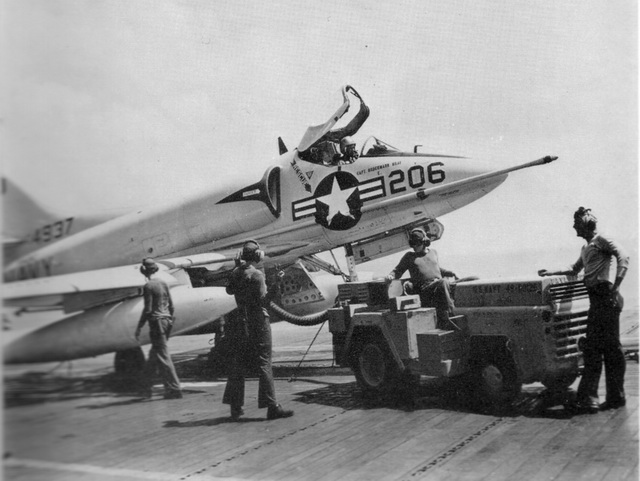
Aero 12 Munitions Cart
Historical Information: The Aero 12 munitions cart has completely superseded the Mk1 on the carrier decks in the late 1950s. Besides standard iron bombs, it was utilized to transport cluster bombs, napalm bombs and various rocket pods. Frequently, a single cart was loaded with as many as two or three bombs, or up to four rocket pods. When fitted with a special adapter, it could carry four AIM-9 Sidewinder missiles, and when fitted with a metal crate it was used to transport miscellaneous items, e.g. various tools, ordnance safety pins, flare & chaff cassettes, etc.
Time period: Late 1950s - present time.
Paint scheme: Initially orange yellow; insignia white starting from mid-1990s.
Photographic proof: link
Model Details: Scratch-built from plastic, metal wire and custom-made photo-etched metal items.
Showing posts with label GSE Model Article. Show all posts
22 December 2019
30 December 2018
Miscellaneous Ground & Carrier Deck Support Equipment Items
In this short article I am presenting another installment of my 1/72 models of miscellaneous ground support & carrier deck equipment items used by the U.S. Navy. This is by no means an exhaustive list of the Navy's GSE: I only model such items that I need for my present and future dioramas, and only those that I could collect sufficient historical information for.
Maintenance Platforms
Historical Information: These types of lightweight portable platforms were utilized for aircraft servicing and maintenance by all branches of the U.S. military.
Time period: 1940s-1950s.
Paint scheme: USN items typically ocean grey; sea blue and olive drab also possible.
Photographic proof: link
Model Details: Both items are scratch-built with the aid of custom-made photo-etched metal parts.
Tow Bar, Early Type
Historical Information: Employed to tow various types of U.S. Navy and Marine Corps aircraft on aircraft carriers as well as on shore stations.
Time period: Mid-1950s - 1960s.
Paint scheme: Orange yellow.
Photographic proof: link
Model Details: Scratch-built from plastic.
A-4 Skyhawk Tiller Bar
Historical Information: When taxiing, steering on the U.S. Navy carrier-based jets was initially achieved through differentially applied main wheel brakes, and later by means of nose-wheel power steering. However, on a carrier deck a tiller bar, handled by a deck crewman, was often employed for more precise steering, especially when lining up with the catapult track (see more details in an article by Tommy H. Thomason: link). Different tiller bars were needed for different aircraft types.
Time period: 1960s.
Paint scheme: Orange yellow.
Photographic proof: link
Model Details: Scratch-built from plastic and metal wire.
A-4 Skyhawk Starter Probe
Historical Information: Early models of the A-4 Skyhawks (specifically, the Wright J65-engined A-4A, A-4B and A-4C), unlike other U.S. Navy carrier-based jets of the period, utilized a very peculiar engine start arrangement: the engine had to be started mechanically by means of a rotating metal shaft inserted into a dedicated receptacle from the outside, and the shaft, in turn, was driven by compressed air obtained from a standard tractor-mounted jet start unit. The rather bulky but man-portable apparatus, made specifically for the early Skyhawks, was known as the "starter probe".
Time period: For as long as the said types remained in service (1955 - mid-1970s).
Paint scheme: Typically insignia red.
Photographic proof: link
Model Details: Scratch-built from plastic and custom-made photo-etched metal parts.
Wheel Chocks
Historical Information: Many different types of aircraft wheel chocks were used by the U.S. Navy throughout the years; what I present here is only a small selection.
Time period: (A) – 1920s - 1930s; (B) – 1930s - 1940s; (C) – 1940s; (D) – 1940 - 1960s.
Paint scheme: Light grey, insignia red or orange yellow.
Photographic proof: (B) - photo; (C) - photo; (D) - photo
Model Details: Scratch-built from metal wire and plastic.
Tie-Down Chains
Historical Information: All aircraft on the U.S. Navy aircraft carriers are secured to the deck when not taxiing, taking off or landing. Tying down was initially done with stout ropes, but in the early 1960s, with the aircraft weight constantly increasing, metal chains came into use.
Time period: 1960s - present time.
Paint scheme: Chain links - invariably rusted metal; hook assemblies - natural metal, insignia red or orange yellow.
Photographic proof: link
Model Details: A metal chain is not an easy object to model, and, from the accuracy perspective, the best way to imitate it would be to use a real chain. The chains I am showing here came from a company called Shipmodeling (Verf' na Stole), have 16 links per cm and are the smallest that I could find. However, these "real" chains are relatively expensive, and it is not easy to make such a chain tout, especially in a confined space under the wings or the belly of your 1/72 scale model. Photo-etched chains (mine came from a set by White Ensign Models #7209), while less realistic than the "real" chains, are therefore usable when you have to imitate an aircraft secured to the deck with multiple chains, or when the access is restricted.
Maintenance Platforms
Historical Information: These types of lightweight portable platforms were utilized for aircraft servicing and maintenance by all branches of the U.S. military.
Time period: 1940s-1950s.
Paint scheme: USN items typically ocean grey; sea blue and olive drab also possible.
Photographic proof: link
Model Details: Both items are scratch-built with the aid of custom-made photo-etched metal parts.
Tow Bar, Early Type
Historical Information: Employed to tow various types of U.S. Navy and Marine Corps aircraft on aircraft carriers as well as on shore stations.
Time period: Mid-1950s - 1960s.
Paint scheme: Orange yellow.
Photographic proof: link
Model Details: Scratch-built from plastic.
A-4 Skyhawk Tiller Bar
Historical Information: When taxiing, steering on the U.S. Navy carrier-based jets was initially achieved through differentially applied main wheel brakes, and later by means of nose-wheel power steering. However, on a carrier deck a tiller bar, handled by a deck crewman, was often employed for more precise steering, especially when lining up with the catapult track (see more details in an article by Tommy H. Thomason: link). Different tiller bars were needed for different aircraft types.
Time period: 1960s.
Paint scheme: Orange yellow.
Photographic proof: link
Model Details: Scratch-built from plastic and metal wire.
A-4 Skyhawk Starter Probe
Historical Information: Early models of the A-4 Skyhawks (specifically, the Wright J65-engined A-4A, A-4B and A-4C), unlike other U.S. Navy carrier-based jets of the period, utilized a very peculiar engine start arrangement: the engine had to be started mechanically by means of a rotating metal shaft inserted into a dedicated receptacle from the outside, and the shaft, in turn, was driven by compressed air obtained from a standard tractor-mounted jet start unit. The rather bulky but man-portable apparatus, made specifically for the early Skyhawks, was known as the "starter probe".
Time period: For as long as the said types remained in service (1955 - mid-1970s).
Paint scheme: Typically insignia red.
Photographic proof: link
Model Details: Scratch-built from plastic and custom-made photo-etched metal parts.
Wheel Chocks
Historical Information: Many different types of aircraft wheel chocks were used by the U.S. Navy throughout the years; what I present here is only a small selection.
Time period: (A) – 1920s - 1930s; (B) – 1930s - 1940s; (C) – 1940s; (D) – 1940 - 1960s.
Paint scheme: Light grey, insignia red or orange yellow.
Photographic proof: (B) - photo; (C) - photo; (D) - photo
Model Details: Scratch-built from metal wire and plastic.
Historical Information: All aircraft on the U.S. Navy aircraft carriers are secured to the deck when not taxiing, taking off or landing. Tying down was initially done with stout ropes, but in the early 1960s, with the aircraft weight constantly increasing, metal chains came into use.
Time period: 1960s - present time.
Paint scheme: Chain links - invariably rusted metal; hook assemblies - natural metal, insignia red or orange yellow.
Photographic proof: link
Model Details: A metal chain is not an easy object to model, and, from the accuracy perspective, the best way to imitate it would be to use a real chain. The chains I am showing here came from a company called Shipmodeling (Verf' na Stole), have 16 links per cm and are the smallest that I could find. However, these "real" chains are relatively expensive, and it is not easy to make such a chain tout, especially in a confined space under the wings or the belly of your 1/72 scale model. Photo-etched chains (mine came from a set by White Ensign Models #7209), while less realistic than the "real" chains, are therefore usable when you have to imitate an aircraft secured to the deck with multiple chains, or when the access is restricted.
25 May 2016
U.S. Navy Ground Support Equipment Models
In this short article I am presenting my 1/72 models of several miscellaneous ground support equipment items used by the U.S. Navy. This is by no means an exhaustive list of the Navy's GSE. I only model such items that I need for my present and future dioramas, and only those that I could collect sufficient historical information for.
Aircraft Maintenance Crane
During the World War II and the Korean War years the U.S. armed forces, including the USAAC / USAF, the Navy and the Marine Corps, used this type of crane for performing maintenance on their aircraft based in theatre. Having no motors, these cranes were manually operated and employed to handle bulky items such as aircraft engines and propellers. Here is an excellent photograph showing a USMC crane in action in Korea: link.
This entirely photoetched metal model was produced by F4Models (cat. # 7029). The metal frame is very delicate, and assembling it is a rather tricky business. To imitate the crane's rigging I used stretched plastic sprue.
A-3 Aircraft Start Unit
This unit was designed to provide electric power necessary to start early jet engines. It saw service with the U.S. Air Force throughout the 1950s. There is also sufficient photographical evidence (link, link) to know that the U.S. Navy and the Marine Corps used this aircraft start unit too, in particular on in-theatre air bases during the Korean War (whether these units were officially acquired by the Navy or simply borrowed by the servicemen in the field is, I think, beside the point).
A resin model of this aircraft start unit is produced by F4Models (cat. # 7028). It is a simple kit with few parts (but it includes parts to build two complete start units). My example is a nearly out-of-the-box build, the only extra is the power cable made of thin copper wire. My model is finished in the prescribed Orange Yellow, but historical photographs show that A-3 start units were also occasionally seen in Olive Drab.
U.S. Navy Air-Transportable Aircraft Start Unit
The purpose of this item of ground support equipment is to provide compressed air for starting aircraft jet engines. Specially designed by Douglas Aircraft Company for the U.S. Navy as an air-transportable unit, it was intended to be carried by fighter or attack aircraft on a standard ordnance pylon thus allowing them to self-deploy. Inside the teardrop-shaped pod was a small gas turbine, and everything needed for operating it – air hose, wheels and a handle to pull it around – was stowed in internal compartments. Throughout the 1950s and 1960s this start unit was frequently seen on Naval Air Stations and Marine Corps Air Stations around such aircraft as the A3D Skywarrior, A4D Skyhawk, F4D Skyray, F3H Demon and F11F Tiger (see a couple of historical photographs: link, link). It remained in active service, albeit in very small numbers, into the 1970s, with the Blue Angels team using such items even in the 1980s until it phased out its Skyhawks (photo).
The standard color for this start unit was Insignia White overall, but available photographic evidence shows that some examples were Orange Yellow, yet others were Sea Blue.
My model is built from the kit produced by F4Models (cat. # 7019).
U.S. Navy Aircraft Start Unit
The purpose of this item of ground support equipment is to provide compressed air for starting aircraft jet engines. Conceivably, this unit (its designation is not known to me, alas) was designed somewhere around 1960 to be installed on the U.S. Navy's MD-1 flight deck tractor, hence its peculiar shape. When the MD-1 tractors have been retired from active duty around 1965, a considerable number of these start units were, apparently, still fit for service. Therefore they have been installed onto light custom-made trailers and employed on Naval Air Stations and Marine Corps Air Stations as land-based, non self-propelled aircraft start units (see a couple of historical photographs: link, link). Frequently seen around such aircraft as A-3 Skywarrior, A-4 Skyhawk, F-8 Crusader, A-6 Intruder, A-7 Corsair, EA-6 Prowler and F-14 Tomcat, this type of ground support equipment remained in active service until the early 1990s.
Available photographic evidence suggests that all examples were finished in the customary Orange Yellow.
A resin model of this aircraft start unit is produced by F4Models (cat. # 7027). My example is a nearly out-of-the-box build, the only extra is the air hose made of two types of metal wire.
NF-2 Lighting Unit
This is a self-contained trailer unit designed to provide lighting for an aircraft service and maintenance area of an air base. It saw service with all branches of the U.S. military since the 1960s, and some examples could still be in service today. Here is a photographic evidence of an NF-2 lighting unit on an USMC facility: link.
A model of this unit is included in the "U.S. Aerospace Ground Equipment" set (cat. # X72-6) produced by Hasegawa. For a kit released in the mid-1980s it is very good. However, most of the small items are way too thick to look realistically in the scale, and thus I replaced them with scratch-built ones. The two floodlights have received metal foil reflectors and clear plastic lenses. My model is finished in Orange Yellow to represent a U.S. Navy item from the 1970s, but historical photographs show that NF-2 lighting units were also occasionally seen in Olive Drab.
U.S. Navy Nitrogen Servicing Unit
The purpose of this item of support equipment is to fill relevant aircraft systems with nitrogen. This type of nitrogen servicing unit is used by the U.S. Navy and the Marine Corps on land bases and on aircraft carrier decks. It first entered service in the mid-1960s (various sub-variants bearing designations NAN-2, -3 and -4), and an updated variant designated as A/M26U-4 is still in use today, its main external difference being the instrument panel. Here are some photographs that show this trailer in use: early variant, late variant.
A model of this interesting item has been recently released by Brengun (cat. # 72004), although Brengun erroneously labels it as "Oxygen cart". It is an excellent kit, accurate and well detailed. Comprising resin parts, photoetched items, film and decal, the kit allows you to build either an early or a late variant of the nitrogen servicing unit. My model is a nearly out-of-the-box build, the only extra being some tubing and valves for the nitrogen tanks. It is finished in Orange Yellow to represent a U.S. Navy item from the 1970s. It should be noted that the late variant of the nitrogen servicing unit, in use since the 2000s, is always painted Insignia White.
Aircraft Maintenance Crane
During the World War II and the Korean War years the U.S. armed forces, including the USAAC / USAF, the Navy and the Marine Corps, used this type of crane for performing maintenance on their aircraft based in theatre. Having no motors, these cranes were manually operated and employed to handle bulky items such as aircraft engines and propellers. Here is an excellent photograph showing a USMC crane in action in Korea: link.
This entirely photoetched metal model was produced by F4Models (cat. # 7029). The metal frame is very delicate, and assembling it is a rather tricky business. To imitate the crane's rigging I used stretched plastic sprue.
A-3 Aircraft Start Unit
This unit was designed to provide electric power necessary to start early jet engines. It saw service with the U.S. Air Force throughout the 1950s. There is also sufficient photographical evidence (link, link) to know that the U.S. Navy and the Marine Corps used this aircraft start unit too, in particular on in-theatre air bases during the Korean War (whether these units were officially acquired by the Navy or simply borrowed by the servicemen in the field is, I think, beside the point).
A resin model of this aircraft start unit is produced by F4Models (cat. # 7028). It is a simple kit with few parts (but it includes parts to build two complete start units). My example is a nearly out-of-the-box build, the only extra is the power cable made of thin copper wire. My model is finished in the prescribed Orange Yellow, but historical photographs show that A-3 start units were also occasionally seen in Olive Drab.
U.S. Navy Air-Transportable Aircraft Start Unit
The purpose of this item of ground support equipment is to provide compressed air for starting aircraft jet engines. Specially designed by Douglas Aircraft Company for the U.S. Navy as an air-transportable unit, it was intended to be carried by fighter or attack aircraft on a standard ordnance pylon thus allowing them to self-deploy. Inside the teardrop-shaped pod was a small gas turbine, and everything needed for operating it – air hose, wheels and a handle to pull it around – was stowed in internal compartments. Throughout the 1950s and 1960s this start unit was frequently seen on Naval Air Stations and Marine Corps Air Stations around such aircraft as the A3D Skywarrior, A4D Skyhawk, F4D Skyray, F3H Demon and F11F Tiger (see a couple of historical photographs: link, link). It remained in active service, albeit in very small numbers, into the 1970s, with the Blue Angels team using such items even in the 1980s until it phased out its Skyhawks (photo).
The standard color for this start unit was Insignia White overall, but available photographic evidence shows that some examples were Orange Yellow, yet others were Sea Blue.
My model is built from the kit produced by F4Models (cat. # 7019).
U.S. Navy Aircraft Start Unit
The purpose of this item of ground support equipment is to provide compressed air for starting aircraft jet engines. Conceivably, this unit (its designation is not known to me, alas) was designed somewhere around 1960 to be installed on the U.S. Navy's MD-1 flight deck tractor, hence its peculiar shape. When the MD-1 tractors have been retired from active duty around 1965, a considerable number of these start units were, apparently, still fit for service. Therefore they have been installed onto light custom-made trailers and employed on Naval Air Stations and Marine Corps Air Stations as land-based, non self-propelled aircraft start units (see a couple of historical photographs: link, link). Frequently seen around such aircraft as A-3 Skywarrior, A-4 Skyhawk, F-8 Crusader, A-6 Intruder, A-7 Corsair, EA-6 Prowler and F-14 Tomcat, this type of ground support equipment remained in active service until the early 1990s.
Available photographic evidence suggests that all examples were finished in the customary Orange Yellow.
A resin model of this aircraft start unit is produced by F4Models (cat. # 7027). My example is a nearly out-of-the-box build, the only extra is the air hose made of two types of metal wire.
This is a self-contained trailer unit designed to provide lighting for an aircraft service and maintenance area of an air base. It saw service with all branches of the U.S. military since the 1960s, and some examples could still be in service today. Here is a photographic evidence of an NF-2 lighting unit on an USMC facility: link.
A model of this unit is included in the "U.S. Aerospace Ground Equipment" set (cat. # X72-6) produced by Hasegawa. For a kit released in the mid-1980s it is very good. However, most of the small items are way too thick to look realistically in the scale, and thus I replaced them with scratch-built ones. The two floodlights have received metal foil reflectors and clear plastic lenses. My model is finished in Orange Yellow to represent a U.S. Navy item from the 1970s, but historical photographs show that NF-2 lighting units were also occasionally seen in Olive Drab.
U.S. Navy Nitrogen Servicing Unit
The purpose of this item of support equipment is to fill relevant aircraft systems with nitrogen. This type of nitrogen servicing unit is used by the U.S. Navy and the Marine Corps on land bases and on aircraft carrier decks. It first entered service in the mid-1960s (various sub-variants bearing designations NAN-2, -3 and -4), and an updated variant designated as A/M26U-4 is still in use today, its main external difference being the instrument panel. Here are some photographs that show this trailer in use: early variant, late variant.
A model of this interesting item has been recently released by Brengun (cat. # 72004), although Brengun erroneously labels it as "Oxygen cart". It is an excellent kit, accurate and well detailed. Comprising resin parts, photoetched items, film and decal, the kit allows you to build either an early or a late variant of the nitrogen servicing unit. My model is a nearly out-of-the-box build, the only extra being some tubing and valves for the nitrogen tanks. It is finished in Orange Yellow to represent a U.S. Navy item from the 1970s. It should be noted that the late variant of the nitrogen servicing unit, in use since the 2000s, is always painted Insignia White.
27 January 2016
U.S. Navy Fire Extinguisher Models
People rarely pay much attention to such a thing as a fire extinguisher: this is just something that has to be handy in certain situations. However, on an air base or on an aircraft carrier deck fire extinguishers are of utmost importance, and therefore they are usually very conspicuous. That means that modellers building a diorama or a vignette can scarcely ignore this relatively unglamorous item.
In this short article I am presenting my 1/72 models of fire extinguishers used by the U.S. Navy. This is by no means an exhaustive list of all fire extinguisher types. I have only built models of those types which I could collect sufficient number of historical photographs for.
1. Portable Fire Extinguisher
This is a portable fire extinguisher of a very basic shape that was in wide use by all branches of the U.S. Military. It was seen on the U.S. Navy aircraft carrier decks throughout the 1940s and 1950s, whereas on shore bases (Navy and Marine Corps Air Stations) it served well into the 1990s.
My model comes from the Fujimi's "Flight Deck Crew & Carrier Tractor" set (cat. # 35001), but I have replaced the hose and the sprayer with scratch-built ones.
Quite recently a new set was released by Aerobonus – "U.S. Navy CO2 PSH-20 Fire Extinguishers" (cat. # 720013). It contains parts to make 6 fire extinguishers, and basing on what I see I would say that it fills the void very nicely.
2. Wheeled Fire Extinguisher
This type of peculiarly shaped wheeled fire extinguisher was in service on the U.S. Navy and Marine Corps Air Stations from the 1960s until the 1980s.
As far as I know it is not kitted yet. I used the photoetched wheels from the "Oxy-acetylene Cart" set by Brengun (cat. # 72011). The agent tanks are scratch-built from plastic and the tubular frame is made of thin metal wire.
3. Wheeled Fire Extinguisher
This type of wheeled fire extinguisher was also in service on the U.S. Navy and Marine Corps Air Stations from the 1960s until the 1980s. Apparently this was the same type of fire extinguisher (or at least a very similar externally) as the one used by the USAF.
Its 1/72 scale model can be found in the "U.S. Aerospace Ground Equipment Set" set manufactured by Hasegawa (cat. # X72-6).
When building my model I only used the tank and the wheels from the Hasegawa set. The tubular frame is scratch-built from metal wire.
4. Wheeled Fire Extinguisher
This type of wheeled fire extinguisher appeared on the U.S. Navy and Marine Corps Air Stations in the 1980s and is still in wide use today. Again, the item appears to be of the same type as the one seen on the USAF air bases.
Its 1/72 scale model can be found in the "U.S. Pilot / Ground Crew Set" set manufactured by Hasegawa (cat. # X72-7).
As before, when building my model I only used the tank and the wheels from the Hasegawa set; everything else is scratch-built from metal wire.
In this short article I am presenting my 1/72 models of fire extinguishers used by the U.S. Navy. This is by no means an exhaustive list of all fire extinguisher types. I have only built models of those types which I could collect sufficient number of historical photographs for.
1. Portable Fire Extinguisher
This is a portable fire extinguisher of a very basic shape that was in wide use by all branches of the U.S. Military. It was seen on the U.S. Navy aircraft carrier decks throughout the 1940s and 1950s, whereas on shore bases (Navy and Marine Corps Air Stations) it served well into the 1990s.
My model comes from the Fujimi's "Flight Deck Crew & Carrier Tractor" set (cat. # 35001), but I have replaced the hose and the sprayer with scratch-built ones.
Quite recently a new set was released by Aerobonus – "U.S. Navy CO2 PSH-20 Fire Extinguishers" (cat. # 720013). It contains parts to make 6 fire extinguishers, and basing on what I see I would say that it fills the void very nicely.
2. Wheeled Fire Extinguisher
This type of peculiarly shaped wheeled fire extinguisher was in service on the U.S. Navy and Marine Corps Air Stations from the 1960s until the 1980s.
As far as I know it is not kitted yet. I used the photoetched wheels from the "Oxy-acetylene Cart" set by Brengun (cat. # 72011). The agent tanks are scratch-built from plastic and the tubular frame is made of thin metal wire.
3. Wheeled Fire Extinguisher
This type of wheeled fire extinguisher was also in service on the U.S. Navy and Marine Corps Air Stations from the 1960s until the 1980s. Apparently this was the same type of fire extinguisher (or at least a very similar externally) as the one used by the USAF.
Its 1/72 scale model can be found in the "U.S. Aerospace Ground Equipment Set" set manufactured by Hasegawa (cat. # X72-6).
When building my model I only used the tank and the wheels from the Hasegawa set. The tubular frame is scratch-built from metal wire.
4. Wheeled Fire Extinguisher
This type of wheeled fire extinguisher appeared on the U.S. Navy and Marine Corps Air Stations in the 1980s and is still in wide use today. Again, the item appears to be of the same type as the one seen on the USAF air bases.
Its 1/72 scale model can be found in the "U.S. Pilot / Ground Crew Set" set manufactured by Hasegawa (cat. # X72-7).
As before, when building my model I only used the tank and the wheels from the Hasegawa set; everything else is scratch-built from metal wire.
3 May 2015
Chevrolet Step-Van Model
1. Introduction
Chevrolet Step-Van vehicle was in service on USAF air bases as well as on some Naval Air Stations throughout the 1970s and until the 1990s. Its purpose was to bring air crews from their waiting areas to aircraft being prepared for sorties.
2. Kit
The model of this van is produced by Hasegawa. It is a part of their "U.S. Pilot / Ground Crew Set" set (cat. # X72-7) which also includes some very nice figures. Hasegawa's model represents the version of Step-Van which, according to a General Motors product brochure, was first introduced in 1969.
All parts are well and very crisply molded. However the kit could really benefit from some additional fine detailing, and the wheels in particular are too toy-like.

3. Construction
I have scratch-built a flat chassis plate for my van because I didn't like the empty spaces that are left in the wheel arches and under the hood if you build the kit according to Hasegawa's instruction. Correctly shaped resin wheels, dashboard, photoetched radiator grille and windshield frame, rear view mirrors, windshield wipers, door handles and badges all come from the dedicated detail set produced by F4Models (cat. # 7030). I have added clear head lights using tiny lenses from a set produced by Elf.


4. Painting & Markings
In accordance with historical photographs of Step-Vans in U.S. Navy service, my model is painted Orange Yellow (FS33538) with Insignia White (FS37875) front and rear bumpers, radiator grille frames and headlight frames.
5. Reference Data
[1] An article on multi-stop / walk-in delivery trucks in Wikipedia: link
[2] A nice selection of historical photos: link
[3] GM's 1969 brochure: link
Chevrolet Step-Van vehicle was in service on USAF air bases as well as on some Naval Air Stations throughout the 1970s and until the 1990s. Its purpose was to bring air crews from their waiting areas to aircraft being prepared for sorties.
2. Kit
The model of this van is produced by Hasegawa. It is a part of their "U.S. Pilot / Ground Crew Set" set (cat. # X72-7) which also includes some very nice figures. Hasegawa's model represents the version of Step-Van which, according to a General Motors product brochure, was first introduced in 1969.
All parts are well and very crisply molded. However the kit could really benefit from some additional fine detailing, and the wheels in particular are too toy-like.

3. Construction
I have scratch-built a flat chassis plate for my van because I didn't like the empty spaces that are left in the wheel arches and under the hood if you build the kit according to Hasegawa's instruction. Correctly shaped resin wheels, dashboard, photoetched radiator grille and windshield frame, rear view mirrors, windshield wipers, door handles and badges all come from the dedicated detail set produced by F4Models (cat. # 7030). I have added clear head lights using tiny lenses from a set produced by Elf.


4. Painting & Markings
In accordance with historical photographs of Step-Vans in U.S. Navy service, my model is painted Orange Yellow (FS33538) with Insignia White (FS37875) front and rear bumpers, radiator grille frames and headlight frames.
5. Reference Data
[1] An article on multi-stop / walk-in delivery trucks in Wikipedia: link
[2] A nice selection of historical photos: link
[3] GM's 1969 brochure: link
2 April 2015
NC-2A & NC-8A U.S. Navy Mobile Power Unit Models
1. Introduction
NC-2A is a mobile electrical power unit designed for use aboard ships. Its purpose is to provide external electric power to aircraft for pre-flight or maintenance purposes. The vehicle has seen active service on the U.S. Navy aircraft carriers from the early 1970s until the late 1990s.
NC-8A is a purpose-built land-based vehicle designed to provide external electric power to aircraft for pre-flight or maintenance purposes. It was in service with the U.S. Navy and Marine Corps from the early 1970s until the late 1990s.
2. Kit
The only models of NC-2A and NC-8A vehicles in the 1:72 scale are manufactured by Verlinden Productions (cat. # 2584). My detailed review of their kit can be found here.
3. Construction
NC-2A
Using the photoetched set made by F4Models (cat. # 7032), I corrected most of the inaccuracies of the original Verlinden model and added some fine detail like radiator grille and tie down rings. Besides that, I corrected the shape of the front left fender as it should be much thinner. Head and tail lights come from a very useful set manufactured by Elf.


NC-8A
Here most of the shortcomings of the original resin model also got corrected with the help of the F4Models photoetched set. The rear compartment is opened to show power cable reels that are stored there. The reels themselves are made from appropriate plastic rod while the power cables are thin copper wire. Headlights are again from the Elf's set.


4. Painting & Markings
From the 1970s and up to the early 1990s all NC-2A and NC-8A vehicles were painted Orange Yellow (FS33538), a standard color for the Navy's support equipment at that time. But this seems to be the only thing that was standard in regards to their painting and markings. Some vehicles did have large black identification numbers and some did not; serial / inventory numbers were seen on some vehicles while others went without; sometimes front and rear bumpers carried diagonal black stripes and sometimes they did not. Application of white reflective stripes also seems to be unique on each vehicle, or at least for a particular unit or Air Station. Headlights on NC-8As were clear white, while on NC-2As they usually were clear red and sometimes clear blue. On both types tail lights were clear red, front retroreflectors were orange and rear ones were red.
In the mid 1990s a new paint scheme of overall Insignia White was introduced for the Navy's support equipment, so some of the NC-2As and NC-8As have spent their last years of active service painted white. On white vehicles reflective stripes were yellow.
5. Reference Data
Listed here.
NC-2A is a mobile electrical power unit designed for use aboard ships. Its purpose is to provide external electric power to aircraft for pre-flight or maintenance purposes. The vehicle has seen active service on the U.S. Navy aircraft carriers from the early 1970s until the late 1990s.
NC-8A is a purpose-built land-based vehicle designed to provide external electric power to aircraft for pre-flight or maintenance purposes. It was in service with the U.S. Navy and Marine Corps from the early 1970s until the late 1990s.
2. Kit
The only models of NC-2A and NC-8A vehicles in the 1:72 scale are manufactured by Verlinden Productions (cat. # 2584). My detailed review of their kit can be found here.
3. Construction
NC-2A
Using the photoetched set made by F4Models (cat. # 7032), I corrected most of the inaccuracies of the original Verlinden model and added some fine detail like radiator grille and tie down rings. Besides that, I corrected the shape of the front left fender as it should be much thinner. Head and tail lights come from a very useful set manufactured by Elf.


NC-8A
Here most of the shortcomings of the original resin model also got corrected with the help of the F4Models photoetched set. The rear compartment is opened to show power cable reels that are stored there. The reels themselves are made from appropriate plastic rod while the power cables are thin copper wire. Headlights are again from the Elf's set.


4. Painting & Markings
From the 1970s and up to the early 1990s all NC-2A and NC-8A vehicles were painted Orange Yellow (FS33538), a standard color for the Navy's support equipment at that time. But this seems to be the only thing that was standard in regards to their painting and markings. Some vehicles did have large black identification numbers and some did not; serial / inventory numbers were seen on some vehicles while others went without; sometimes front and rear bumpers carried diagonal black stripes and sometimes they did not. Application of white reflective stripes also seems to be unique on each vehicle, or at least for a particular unit or Air Station. Headlights on NC-8As were clear white, while on NC-2As they usually were clear red and sometimes clear blue. On both types tail lights were clear red, front retroreflectors were orange and rear ones were red.
In the mid 1990s a new paint scheme of overall Insignia White was introduced for the Navy's support equipment, so some of the NC-2As and NC-8As have spent their last years of active service painted white. On white vehicles reflective stripes were yellow.
5. Reference Data
Listed here.
12 March 2015
Chevrolet Bel Air Coupe Model
1. Introduction
Models of U.S. cars – putting aside military jeeps and trucks – are extremely scarce in the 1:72 scale. In fact, as of March 2015, there is only one model kit that fits the criteria, and that is the 1942 Ford sedan produced by ACE. One may turn to die-cast metal models, but in the 1:72 scale there isn't much on offer either. Some die-cast models made by Hongwell have come to my attention, and from those I snatched a model of 1957 Chevrolet Bel Air Coupe to add some diversity to my collection of tractors and other GSE.
2. Kit
The Hongwell's die-cast metal model represents a 1957 Chevrolet Bel Air Hardtop Coupe very well. Considering the scale, there is a lot of fine metal and plastic detail, as well as very nice stencilling. I see only one serious accuracy issue: both axles are placed around 2mm father back than they should have been, and this damages the car's beautiful profile. A couple of press form seam lines mar the exterior slightly, and the bonnet inexplicably lacks the Chevrolet V-shaped badge (which is duly present on the trunk lid). The model should not be blamed for its unpainted interior, though: this is pretty common in the die-cast world, even for the much larger 1:43 scale.


3. Construction
Disassembling the model was a challenge: Hongwell has chosen rivets instead of screws for attaching the model's chassis to the body. Those rivets were so tough that I had to have them removed by a precision drilling machine at my father acquaintance's workshop.
Although the Hongwell's model is good in itself, I believed it could be made better. These are the improvements I've made:
- The whole chassis plate moved ~2mm forward for more accurate positioning of axles in relation to body.
- Plastic side windows removed so as to allow a better look into the interior.
- Front seat scratch-built from plastic (the original part was missing entirely – obviously, a factory defect).
- Custom-made photoetched steering wheel, pedals, windshield wipers, rearview mirror and license plates added.
- Original wheels replaced with ones having more realistically looking hub caps (taken from another Hongwell die-cast model).


4. Painting & Markings
I chose not to repaint the exterior so as to preserve the delicately stenciled 'Bel Air" names and body trim (in silver in gold, which I cannot imitate with home-made decals). Original plastic interior looked like a black hole and I have, of course, painted it, trying to pick colors to match the exterior, as was customary in those good old years. Dashboard dials and license plates received home-printed decals. Tires got airbrushed whitewalls and radiator grilles got dark wash to bring out the relief.
I don't have any data to prove that the Bel Air Coupe was employed by any of the U.S. Armed Services, and a civilian car has, strictly speaking, no business sitting near military airplanes. Still, I used this beautiful car model to imitate a PR photo resembling this one.
5. Reference Data
[1] Basic information on the Bel Air in Wikipedia: link.
Models of U.S. cars – putting aside military jeeps and trucks – are extremely scarce in the 1:72 scale. In fact, as of March 2015, there is only one model kit that fits the criteria, and that is the 1942 Ford sedan produced by ACE. One may turn to die-cast metal models, but in the 1:72 scale there isn't much on offer either. Some die-cast models made by Hongwell have come to my attention, and from those I snatched a model of 1957 Chevrolet Bel Air Coupe to add some diversity to my collection of tractors and other GSE.
2. Kit
The Hongwell's die-cast metal model represents a 1957 Chevrolet Bel Air Hardtop Coupe very well. Considering the scale, there is a lot of fine metal and plastic detail, as well as very nice stencilling. I see only one serious accuracy issue: both axles are placed around 2mm father back than they should have been, and this damages the car's beautiful profile. A couple of press form seam lines mar the exterior slightly, and the bonnet inexplicably lacks the Chevrolet V-shaped badge (which is duly present on the trunk lid). The model should not be blamed for its unpainted interior, though: this is pretty common in the die-cast world, even for the much larger 1:43 scale.


3. Construction
Disassembling the model was a challenge: Hongwell has chosen rivets instead of screws for attaching the model's chassis to the body. Those rivets were so tough that I had to have them removed by a precision drilling machine at my father acquaintance's workshop.
Although the Hongwell's model is good in itself, I believed it could be made better. These are the improvements I've made:
- The whole chassis plate moved ~2mm forward for more accurate positioning of axles in relation to body.
- Plastic side windows removed so as to allow a better look into the interior.
- Front seat scratch-built from plastic (the original part was missing entirely – obviously, a factory defect).
- Custom-made photoetched steering wheel, pedals, windshield wipers, rearview mirror and license plates added.
- Original wheels replaced with ones having more realistically looking hub caps (taken from another Hongwell die-cast model).


4. Painting & Markings
I chose not to repaint the exterior so as to preserve the delicately stenciled 'Bel Air" names and body trim (in silver in gold, which I cannot imitate with home-made decals). Original plastic interior looked like a black hole and I have, of course, painted it, trying to pick colors to match the exterior, as was customary in those good old years. Dashboard dials and license plates received home-printed decals. Tires got airbrushed whitewalls and radiator grilles got dark wash to bring out the relief.
I don't have any data to prove that the Bel Air Coupe was employed by any of the U.S. Armed Services, and a civilian car has, strictly speaking, no business sitting near military airplanes. Still, I used this beautiful car model to imitate a PR photo resembling this one.
5. Reference Data
[1] Basic information on the Bel Air in Wikipedia: link.
22 December 2014
U.S. Navy Flight Deck Tractor Models
I always wanted to have all types of the U.S. Navy's flight deck tractors in the 1:72 scale so as to be able to compliment every type of the U.S. carrier aircraft model with a contemporary little tractor. And although my diorama projects are not complete yet, the subject of flight deck tractor models is now resolved for me. This article covers my models of all types of flight deck tractors that served on the U.S. Navy aircraft carriers.
I. Willys MB Flight Deck Tractor
1. Introduction
Basic information on the Willys MB ¼ ton 4x4 utility truck is available in Wikipedia (link) and will not be repeated here. However, not everyone knows that in addition to widespread use by the Army and the Air Force the ubiquitous jeep has also served on aircraft carriers.
Willys MB jeeps appeared on U.S. Navy carrier decks in mid 1942. At this time Grumman Avenger torpedo-bomber was entering squadron service and it was much heavier than the mainstays of early wartime air groups, F4F Wildcat fighters and SBD Dauntless dive bombers. Thus the long established practice of manhandling aircraft around the deck began to negatively affect the efficiency of flight operations, which already increased dramatically when compared to the pre-war years and the first months of war. The logical choice was to have aircraft towed by tractor tugs, and Willys MB jeeps, together with Ford and Clark tractors, were acquired to serve in this role. Thus the Willys jeeps have faithfully served as aircraft tractors on fleet carriers (Yorktown and Essex classes) as well as on smaller ships (Independence, Bogue, Sangamon, Casablanca classes) till the end of the war. Afterwards, most shipboard jeeps were retired. For a short period of time some were retained for use as aircraft starters until replaced by purpose-built NC-1A vehicles in the early 1950s.
2. Kit
A number of Willys MB kits are available in the 1:72 scale. There are older models from Hasegawa, Academy and Italery, as well as more modern ones offered by Airfix (re-packed by Heller) and S-Model.
As I lack the S-Model's kit, my brief comparison will only focus on the differences between the newer Airfix / Heller sets (catalogue numbers 01322 and 79997 respectively) and the ageing Hasegawa / Academy offerings.
In my view, the Airfix / Heller's item will represent a real Willys quite accurately even when built straight out of the box. First of all, the wheels and the radiator grille – both very distinctive features of this legendary vehicle – are way more accurate compared to what we see in older kits. Then, considerably more interior and chassis details are present, although these are still too thick and rough for the scale. On the down side, the axe-and-shovel toolkit is molded together with the bodywork, and the grille is marred by a round badge intended for data on the vehicle weight and bridge class (not applicable for the USN vehicles).
For the purpose of comparison I enclose photographs of Airfix (olive in color) and Hasegawa (light grey) kit parts.


3. Construction
When building my model, I made the following improvements and changes to the Airfix kit:
- Details molded together with the jeep's body (braces, toolkit, etc.) removed.
- Instead, the following detailing scratch-built and added: spare wheel and jerrycan empty holders, hood locks, steering wheel, gearbox levers, pedals.
- Scratch-built detailing added to the chassis, including shock absorbers, leaf springs, exhaust system and the engine block.
- Clear headlights with foil reflectors (from an aftermarket set by Elf) installed.
- Photoetched metal radiator grille, custom-designed and manufactured, used in place of the respective plastic part.
4. Painting & Markings
Color historical photographs confirm the existence of Olive Drab (FS34087), Ocean Grey (FS36187) and Sea Blue (FS15042) painted Jeeps on carrier decks during the war years. In that period overall Ocean Grey was the standard color, while Olive Drab and Sea Blue were exceptions, not the rule. After the war most carrier deck vehicles, including the remaining Willys jeeps, were repainted with Orange Yellow (FS33538).
It appears that the jeeps did not receive any standardized markings while in service on carriers. There is a couple of photos where jeeps carry "U.S.N. *****" legend on the hood; but on a majority of historical photographs carrier-based jeeps do not have any markings whatsoever.
My model is painted Ocean Grey FS36187 overall so as to represent a most typical wartime case.
5. Reference Data
[1] The U.S. Army Jeep at War | S.J.Zaloga | Concord Publications, 2009
[2] A selection of photo walk-arounds: link
[3] An article on the history of the U.S. Navy's flight deck tractors | Military Aircraft Monthly magazine, May 2010 issue, pages 68-70
[4] Some historical photographs that show carrier deck Willys jeeps in various colors: link, link, link, link, link.
II. Clarktor 6 Flight Deck Tractor
1. Introduction
Same as with Willys jeeps, the U.S. Navy started to use Clark tractors on its aircraft carriers in the first wartime years. Clarktor 6 tractors, which by that time has already been in service on the U.S. Army Air Force airfields, helped to tow and position aircraft on the carriers' busy flight decks and saw success in this role. Replaced by newer flight deck tractors in the mid 1950s, Clarktors continued to serve on some Naval Air Stations until the late 1960s.
2. Kit
Clarktor 6 tractor model in the 1:72 scale is available from Academy and VideoAviation. My model comes from the Academy's set ("U.S. Ambulance & Tow Truck", catalogue # 13403) which also includes a Dodge WC54 ambulance and a rather generic bomb cart. The plastic is good, but the tractor's parts are a bit crude and lack fine detailing. To build an accurate model one will have to replace the wheels and to correct the shape of the front grille, rear fenders, hood and dashboard. An aftermarket photoetched detail set by Eduard (catalogue # 22111) is available for this kit. Most photoetched parts are there to detail the Dodge ambulance; those intended for the tractor are few and not particularly accurate, especially the front grille and the dashboard.


3. Construction
My Clarktor model from the Academy's set was subject to the following improvements:
- The tractor's body was corrected to accommodate twin rear wheels (as seen on most USN Clarktors); this included modifying the rear wheel wells and fenders.
- The kit's wheels do not even remotely resemble the real thing. Therefore new front and rear wheels were made using some aircraft wheels from a box of spares.
- New front grille was made, as neither the kit's original one nor the one from a photoetched detail set made by Eduard are accurate.
- Dashboard and engine cowling's side panels were made from scratch. Again, neither the kit's original dashboard nor the one offered by Eduard is accurate.
- Finally, I have added clear headlights with metal foil reflectors.


4. Painting & Markings
Wartime flight deck Clarktors were painted overall Ocean Grey (FS36187). After the war they were repainted with Orange Yellow (FS33538). It appears that Clark tractors did not receive any standardized markings while in service on carriers. There are some photos where they carry "U.S.N. 11-*****" legend on the hood; but on most historical photographs carrier-based Clarks do not carry any identification numbers. However, many carry black diagonal stripes on the radiator grille.
My model is painted Orange Yellow to represent a post-war flight deck tractor.
5. Reference Data
[1] A photo walk-around (relevant pictures are numbered 1, 2, 3 and 13 through 16): link
[2] A number of pictures on this page show Clark tractors in service on the USS Coral Sea: link
III. Ford BNO-40 Flight Deck Tractor
1. Introduction
This type of flight deck tractor, known as Ford BNO-40 or – when in civilian use– as Ford Ferguson 9N, has entered service with the U.S. Navy in the first wartime years. These ubiquitous vehicles served on most USN carriers, including USS Enterprise (CV-6), Essex and Midway class attack carriers, Independence class light carriers and even the smaller Bogue, Sangamon, Casablanca and Commencement Bay class escort ships. After seeing through both the World War II and the Korean war they were replaced on U.S. carriers by newer tractors in the mid 1950s, while some went to work for the French Navy on the decks of R96 La Fayette (ex USS Langley) and R97 Bois Belleau (ex USS Belleau Wood).
2. Kit
Ford BNO-40 flight deck tractor model kit in the 1:72 scale is available from F4Models (catalogue # 7007). The kit includes resin and photoetched parts. Driver's position and engine compartment are nicely detailed.
3. Construction
I have built my kit straight out-of-the-box. One must take care when bending the photoetched metal radiator grille and rear fenders so as to avoid making sharp edges.


4. Painting & Markings
Same as with Clark tractors mentioned above, wartime carrier deck Ford tractors had Ocean Grey paint jobs. After the war, some were repainted with Orange Yellow, but some retained their original Ocean Grey paint. Many had black & yellow diagonal stripes on their front panels and radiator grilles. Some carried "BNO-40-****" or "U.S.N. 11-*****" serial numbers on the hood. Many had large single- or double-digit identification numbers painted on front panels and rear fenders.
My model is painted Ocean Grey to represent a wartime flight deck tractor.
5. Reference Data
[1] Technical data and some walk-around photos of a restored Ford Ferguson 9N on Estrella WarBirds Museum's site: link
[2] Some historical photographs that show Ford tractors in action on flight decks: link, link, link.
IV. MD-1 Flight Deck Tractor
1. Introduction
In the 1950s, to keep pace with growing weight of modern carrier jets, the U.S. Navy faced a need to replace its aging fleet of Ford and Clark flight deck tractors in use since the World War II. The new tractor for the Navy, the MD-1, has entered service in the mid 1950s. Apart from aircraft towing and positioning, MD-1s were employed to start up aircraft jet engines. For this purpose many were fitted with jet turbine start units mounted on the platform in the rear. MD-1 tractors served on Essex / Oriskany class, Midway class and Forrestal / Kitty Hawk class carriers of the U.S. Navy until the mid 1960s. They have also been employed on the Royal Canadian Navy's HMCS Bonaventure and on the Brazilian Navy's Minas Gerais carriers.
2. Kit
MD-1 flight deck tractor model kit in the 1:72 scale is available from F4Models (catalogue # 7001). The kit contains resin and photo etched parts that allow for at several different options (with or without starter unit; different front grille; arrangement of ballast weights).


3. Construction
My model of the MD-1 is very close to an out-of-the-box build. I have added a couple of hand braces scratch-built from thin wire, and also an air hose that is used to start aircraft jet engines. Headlamps are made from small bowl-shaped pieces of metal foil filled with clear varnish.


4. Painting & Markings
All U.S. Navy MD-1s were overall Orange Yellow (FS33538). Many had their front and rear panels painted with black diagonal stripes. Most carried "USN 49-*****" serial numbers on the hood. Some had large identification numbers, but their placement and appearance was not standardized, apparently.
5. Reference Data
[1] An article on the history of the U.S. Navy's flight deck tractors | Military Aircraft Monthly magazine, May 2010 issue, pages 68-70
[2] Some historical photographs that show MD-1 tractors in action on flight decks: link, link, link, link.
V. MD-3 Flight Deck Tractor
1. Introduction
The MD-3 tractor appeared on the flight decks of the U.S. Navy carriers in the early 1960s. Being probably the first U.S. purpose-built shipboard tractor, it was substantially larger and heavier than all its predecessors so as to cope with towing heavier aircraft, but at the same time it sported a very low profile in order to fit under the long sleek noses of modern aircraft. An interesting feature was the modular rear deck: different containers can be flush-mounted there, thus defining the vehicle's role. The jet aircraft start unit, housing a gas turbine air compressor, was the most common: nearly all MD-3s on carriers were equipped with one. A frame containing a compact fire fighting unit could also be employed. The vehicle proved to be a success and came to serve on all U.S. carriers (including Oriskany, Midway, Forrestal, Kitty Hawk, Enterprise and Nimitz classes) as well as on most helicopter carriers and assault ships. A small number of MD-3 flight deck tractors were also employed on the Royal Canadian Navy's HMCS Bonaventure and on the Argentine Navy's carrier Veinticinco de Mayo.
In the mid 1990s MD-3 tractors have been replaced on the U.S. Navy ships by a newer, updated version that bears the designation A/S32A-31A and differs from the original tractor in several aspects (see section VI below).
2. Kit
MD-3 models in the 1:72 scale can be obtained from either Fujimi, Verlinden or DreamModel. My kit comes from the Fujimi's "Flight Deck Crew & Carrier Tractor" set (catalogue # 35001) which also includes ten flight deck personnel figures. The set contains the early version of the tractor and provides three options: one can build a tractor with either a compressor or a firefighting unit attached, or have it in a plain "tractor only" configuration. The parts are well molded and provide good out-of-the-box detail. There are a number of accuracy issues, however:
1) The rear wheels on MD-3 tractors have twin tires, whereas the kit offers single tires.
2) The driver's compartment is too wide: it is 52% of the total width of the kit while on a real MD-3 it is just 36% of the total width.
3) In the kit, there is a projection under the driver's seat that is not confirmed by photographs of actual MD-3s.


3. Construction
My model was subject to the following improvements:
- I have the kit's rear single wheels replaced with twin ones; this process included making wider wheel wells in the tractor's body and getting additional tires by replicating the original ones through casting.
- Scratch-built hand braces, levers and pedals added, as well as clear headlights with metal foil reflectors.
- The compressor's air hose is also scratch-built, as the one supplied with the kit looks genuinely plastic.
- Tie-down chains and wheel chokes were added, as operational MD-3 photos show that various gear was frequently stored on the tractor's top deck.
I have not corrected the width of the driver's compartment on my model; therefore it is inaccurate, and I will be building another one some time in the future, keeping in mind all necessary corrections.


4. Painting & Markings
From the 1960s and up to the early 1990s all MD-3s serving as tow tractors were painted Orange Yellow (FS33538), a standard color for the Navy's support equipment at that time. Tractor bumpers were painted with diagonal black stripes, towing hooks were dull red and the special anti-skid coating on the tractor's top surface had a distinct asphalt-like color and texture. Most MD-3 tractors had large identification numbers painted on their sides, and sometimes on the top anti-skid surface as well. In the 1960s and 1970s most MD-3s carried "USN 49-*****" serial numbers on the hood. Later in their service life serial numbers were changed to "5MH***", and the tractors also received equipment code "GPC7" (same code for all MD-3s).
In the early 1990s a new paint scheme of overall Insignia White was introduced for shipboard support equipment. Shift to this new scheme was a gradual process, so both white and yellow MD-3s could be seen working side by side for some time. Simultaneously, the tractors received reflective stripes and a lot of small stenciling, including various warning and service notes (none of which are seen on MD-3 photos from the 1960s, 70s and 80s).
5. Reference Data
[1] An article on the history of the U.S. Navy's flight deck tractors | Military Aircraft Monthly magazine, May 2010 issue, pages 68-70
[2] A number of pictures on this page show old MD-3 tractors in service on the USS Coral Sea: link
VI. A/S32A-31A Flight Deck Tractor
1. Introduction
A/S32A-31A is a current flight deck tractor for all active U.S. Navy aircraft carriers and amphibious ships, including LHA, LHD, LSD, LPD and LPH classes. On carriers the vehicle is typically equipped with a gas turbine unit to start jet aircraft engines. Externally this new version of the tractor differs from the early MD-3s by wider rear fenders, slightly raised rear deck, different wheels and new starter unit.
I. Willys MB Flight Deck Tractor
1. Introduction
Basic information on the Willys MB ¼ ton 4x4 utility truck is available in Wikipedia (link) and will not be repeated here. However, not everyone knows that in addition to widespread use by the Army and the Air Force the ubiquitous jeep has also served on aircraft carriers.
Willys MB jeeps appeared on U.S. Navy carrier decks in mid 1942. At this time Grumman Avenger torpedo-bomber was entering squadron service and it was much heavier than the mainstays of early wartime air groups, F4F Wildcat fighters and SBD Dauntless dive bombers. Thus the long established practice of manhandling aircraft around the deck began to negatively affect the efficiency of flight operations, which already increased dramatically when compared to the pre-war years and the first months of war. The logical choice was to have aircraft towed by tractor tugs, and Willys MB jeeps, together with Ford and Clark tractors, were acquired to serve in this role. Thus the Willys jeeps have faithfully served as aircraft tractors on fleet carriers (Yorktown and Essex classes) as well as on smaller ships (Independence, Bogue, Sangamon, Casablanca classes) till the end of the war. Afterwards, most shipboard jeeps were retired. For a short period of time some were retained for use as aircraft starters until replaced by purpose-built NC-1A vehicles in the early 1950s.
2. Kit
A number of Willys MB kits are available in the 1:72 scale. There are older models from Hasegawa, Academy and Italery, as well as more modern ones offered by Airfix (re-packed by Heller) and S-Model.
As I lack the S-Model's kit, my brief comparison will only focus on the differences between the newer Airfix / Heller sets (catalogue numbers 01322 and 79997 respectively) and the ageing Hasegawa / Academy offerings.
In my view, the Airfix / Heller's item will represent a real Willys quite accurately even when built straight out of the box. First of all, the wheels and the radiator grille – both very distinctive features of this legendary vehicle – are way more accurate compared to what we see in older kits. Then, considerably more interior and chassis details are present, although these are still too thick and rough for the scale. On the down side, the axe-and-shovel toolkit is molded together with the bodywork, and the grille is marred by a round badge intended for data on the vehicle weight and bridge class (not applicable for the USN vehicles).
For the purpose of comparison I enclose photographs of Airfix (olive in color) and Hasegawa (light grey) kit parts.


3. Construction
When building my model, I made the following improvements and changes to the Airfix kit:
- Details molded together with the jeep's body (braces, toolkit, etc.) removed.
- Instead, the following detailing scratch-built and added: spare wheel and jerrycan empty holders, hood locks, steering wheel, gearbox levers, pedals.
- Scratch-built detailing added to the chassis, including shock absorbers, leaf springs, exhaust system and the engine block.
- Clear headlights with foil reflectors (from an aftermarket set by Elf) installed.
- Photoetched metal radiator grille, custom-designed and manufactured, used in place of the respective plastic part.
4. Painting & Markings
Color historical photographs confirm the existence of Olive Drab (FS34087), Ocean Grey (FS36187) and Sea Blue (FS15042) painted Jeeps on carrier decks during the war years. In that period overall Ocean Grey was the standard color, while Olive Drab and Sea Blue were exceptions, not the rule. After the war most carrier deck vehicles, including the remaining Willys jeeps, were repainted with Orange Yellow (FS33538).
It appears that the jeeps did not receive any standardized markings while in service on carriers. There is a couple of photos where jeeps carry "U.S.N. *****" legend on the hood; but on a majority of historical photographs carrier-based jeeps do not have any markings whatsoever.
My model is painted Ocean Grey FS36187 overall so as to represent a most typical wartime case.
5. Reference Data
[1] The U.S. Army Jeep at War | S.J.Zaloga | Concord Publications, 2009
[2] A selection of photo walk-arounds: link
[3] An article on the history of the U.S. Navy's flight deck tractors | Military Aircraft Monthly magazine, May 2010 issue, pages 68-70
[4] Some historical photographs that show carrier deck Willys jeeps in various colors: link, link, link, link, link.
II. Clarktor 6 Flight Deck Tractor
1. Introduction
Same as with Willys jeeps, the U.S. Navy started to use Clark tractors on its aircraft carriers in the first wartime years. Clarktor 6 tractors, which by that time has already been in service on the U.S. Army Air Force airfields, helped to tow and position aircraft on the carriers' busy flight decks and saw success in this role. Replaced by newer flight deck tractors in the mid 1950s, Clarktors continued to serve on some Naval Air Stations until the late 1960s.
2. Kit
Clarktor 6 tractor model in the 1:72 scale is available from Academy and VideoAviation. My model comes from the Academy's set ("U.S. Ambulance & Tow Truck", catalogue # 13403) which also includes a Dodge WC54 ambulance and a rather generic bomb cart. The plastic is good, but the tractor's parts are a bit crude and lack fine detailing. To build an accurate model one will have to replace the wheels and to correct the shape of the front grille, rear fenders, hood and dashboard. An aftermarket photoetched detail set by Eduard (catalogue # 22111) is available for this kit. Most photoetched parts are there to detail the Dodge ambulance; those intended for the tractor are few and not particularly accurate, especially the front grille and the dashboard.


3. Construction
My Clarktor model from the Academy's set was subject to the following improvements:
- The tractor's body was corrected to accommodate twin rear wheels (as seen on most USN Clarktors); this included modifying the rear wheel wells and fenders.
- The kit's wheels do not even remotely resemble the real thing. Therefore new front and rear wheels were made using some aircraft wheels from a box of spares.
- New front grille was made, as neither the kit's original one nor the one from a photoetched detail set made by Eduard are accurate.
- Dashboard and engine cowling's side panels were made from scratch. Again, neither the kit's original dashboard nor the one offered by Eduard is accurate.
- Finally, I have added clear headlights with metal foil reflectors.


4. Painting & Markings
Wartime flight deck Clarktors were painted overall Ocean Grey (FS36187). After the war they were repainted with Orange Yellow (FS33538). It appears that Clark tractors did not receive any standardized markings while in service on carriers. There are some photos where they carry "U.S.N. 11-*****" legend on the hood; but on most historical photographs carrier-based Clarks do not carry any identification numbers. However, many carry black diagonal stripes on the radiator grille.
My model is painted Orange Yellow to represent a post-war flight deck tractor.
5. Reference Data
[1] A photo walk-around (relevant pictures are numbered 1, 2, 3 and 13 through 16): link
[2] A number of pictures on this page show Clark tractors in service on the USS Coral Sea: link
III. Ford BNO-40 Flight Deck Tractor
1. Introduction
This type of flight deck tractor, known as Ford BNO-40 or – when in civilian use– as Ford Ferguson 9N, has entered service with the U.S. Navy in the first wartime years. These ubiquitous vehicles served on most USN carriers, including USS Enterprise (CV-6), Essex and Midway class attack carriers, Independence class light carriers and even the smaller Bogue, Sangamon, Casablanca and Commencement Bay class escort ships. After seeing through both the World War II and the Korean war they were replaced on U.S. carriers by newer tractors in the mid 1950s, while some went to work for the French Navy on the decks of R96 La Fayette (ex USS Langley) and R97 Bois Belleau (ex USS Belleau Wood).
2. Kit
Ford BNO-40 flight deck tractor model kit in the 1:72 scale is available from F4Models (catalogue # 7007). The kit includes resin and photoetched parts. Driver's position and engine compartment are nicely detailed.
3. Construction
I have built my kit straight out-of-the-box. One must take care when bending the photoetched metal radiator grille and rear fenders so as to avoid making sharp edges.


4. Painting & Markings
Same as with Clark tractors mentioned above, wartime carrier deck Ford tractors had Ocean Grey paint jobs. After the war, some were repainted with Orange Yellow, but some retained their original Ocean Grey paint. Many had black & yellow diagonal stripes on their front panels and radiator grilles. Some carried "BNO-40-****" or "U.S.N. 11-*****" serial numbers on the hood. Many had large single- or double-digit identification numbers painted on front panels and rear fenders.
My model is painted Ocean Grey to represent a wartime flight deck tractor.
5. Reference Data
[1] Technical data and some walk-around photos of a restored Ford Ferguson 9N on Estrella WarBirds Museum's site: link
[2] Some historical photographs that show Ford tractors in action on flight decks: link, link, link.
IV. MD-1 Flight Deck Tractor
1. Introduction
In the 1950s, to keep pace with growing weight of modern carrier jets, the U.S. Navy faced a need to replace its aging fleet of Ford and Clark flight deck tractors in use since the World War II. The new tractor for the Navy, the MD-1, has entered service in the mid 1950s. Apart from aircraft towing and positioning, MD-1s were employed to start up aircraft jet engines. For this purpose many were fitted with jet turbine start units mounted on the platform in the rear. MD-1 tractors served on Essex / Oriskany class, Midway class and Forrestal / Kitty Hawk class carriers of the U.S. Navy until the mid 1960s. They have also been employed on the Royal Canadian Navy's HMCS Bonaventure and on the Brazilian Navy's Minas Gerais carriers.
2. Kit
MD-1 flight deck tractor model kit in the 1:72 scale is available from F4Models (catalogue # 7001). The kit contains resin and photo etched parts that allow for at several different options (with or without starter unit; different front grille; arrangement of ballast weights).


3. Construction
My model of the MD-1 is very close to an out-of-the-box build. I have added a couple of hand braces scratch-built from thin wire, and also an air hose that is used to start aircraft jet engines. Headlamps are made from small bowl-shaped pieces of metal foil filled with clear varnish.


4. Painting & Markings
All U.S. Navy MD-1s were overall Orange Yellow (FS33538). Many had their front and rear panels painted with black diagonal stripes. Most carried "USN 49-*****" serial numbers on the hood. Some had large identification numbers, but their placement and appearance was not standardized, apparently.
5. Reference Data
[1] An article on the history of the U.S. Navy's flight deck tractors | Military Aircraft Monthly magazine, May 2010 issue, pages 68-70
[2] Some historical photographs that show MD-1 tractors in action on flight decks: link, link, link, link.
V. MD-3 Flight Deck Tractor
1. Introduction
The MD-3 tractor appeared on the flight decks of the U.S. Navy carriers in the early 1960s. Being probably the first U.S. purpose-built shipboard tractor, it was substantially larger and heavier than all its predecessors so as to cope with towing heavier aircraft, but at the same time it sported a very low profile in order to fit under the long sleek noses of modern aircraft. An interesting feature was the modular rear deck: different containers can be flush-mounted there, thus defining the vehicle's role. The jet aircraft start unit, housing a gas turbine air compressor, was the most common: nearly all MD-3s on carriers were equipped with one. A frame containing a compact fire fighting unit could also be employed. The vehicle proved to be a success and came to serve on all U.S. carriers (including Oriskany, Midway, Forrestal, Kitty Hawk, Enterprise and Nimitz classes) as well as on most helicopter carriers and assault ships. A small number of MD-3 flight deck tractors were also employed on the Royal Canadian Navy's HMCS Bonaventure and on the Argentine Navy's carrier Veinticinco de Mayo.
In the mid 1990s MD-3 tractors have been replaced on the U.S. Navy ships by a newer, updated version that bears the designation A/S32A-31A and differs from the original tractor in several aspects (see section VI below).
2. Kit
MD-3 models in the 1:72 scale can be obtained from either Fujimi, Verlinden or DreamModel. My kit comes from the Fujimi's "Flight Deck Crew & Carrier Tractor" set (catalogue # 35001) which also includes ten flight deck personnel figures. The set contains the early version of the tractor and provides three options: one can build a tractor with either a compressor or a firefighting unit attached, or have it in a plain "tractor only" configuration. The parts are well molded and provide good out-of-the-box detail. There are a number of accuracy issues, however:
1) The rear wheels on MD-3 tractors have twin tires, whereas the kit offers single tires.
2) The driver's compartment is too wide: it is 52% of the total width of the kit while on a real MD-3 it is just 36% of the total width.
3) In the kit, there is a projection under the driver's seat that is not confirmed by photographs of actual MD-3s.


3. Construction
My model was subject to the following improvements:
- I have the kit's rear single wheels replaced with twin ones; this process included making wider wheel wells in the tractor's body and getting additional tires by replicating the original ones through casting.
- Scratch-built hand braces, levers and pedals added, as well as clear headlights with metal foil reflectors.
- The compressor's air hose is also scratch-built, as the one supplied with the kit looks genuinely plastic.
- Tie-down chains and wheel chokes were added, as operational MD-3 photos show that various gear was frequently stored on the tractor's top deck.
I have not corrected the width of the driver's compartment on my model; therefore it is inaccurate, and I will be building another one some time in the future, keeping in mind all necessary corrections.


4. Painting & Markings
From the 1960s and up to the early 1990s all MD-3s serving as tow tractors were painted Orange Yellow (FS33538), a standard color for the Navy's support equipment at that time. Tractor bumpers were painted with diagonal black stripes, towing hooks were dull red and the special anti-skid coating on the tractor's top surface had a distinct asphalt-like color and texture. Most MD-3 tractors had large identification numbers painted on their sides, and sometimes on the top anti-skid surface as well. In the 1960s and 1970s most MD-3s carried "USN 49-*****" serial numbers on the hood. Later in their service life serial numbers were changed to "5MH***", and the tractors also received equipment code "GPC7" (same code for all MD-3s).
In the early 1990s a new paint scheme of overall Insignia White was introduced for shipboard support equipment. Shift to this new scheme was a gradual process, so both white and yellow MD-3s could be seen working side by side for some time. Simultaneously, the tractors received reflective stripes and a lot of small stenciling, including various warning and service notes (none of which are seen on MD-3 photos from the 1960s, 70s and 80s).
5. Reference Data
[1] An article on the history of the U.S. Navy's flight deck tractors | Military Aircraft Monthly magazine, May 2010 issue, pages 68-70
[2] A number of pictures on this page show old MD-3 tractors in service on the USS Coral Sea: link
VI. A/S32A-31A Flight Deck Tractor
1. Introduction
A/S32A-31A is a current flight deck tractor for all active U.S. Navy aircraft carriers and amphibious ships, including LHA, LHD, LSD, LPD and LPH classes. On carriers the vehicle is typically equipped with a gas turbine unit to start jet aircraft engines. Externally this new version of the tractor differs from the early MD-3s by wider rear fenders, slightly raised rear deck, different wheels and new starter unit.
The A/S-32A-31A flight deck tractor was in service on all U.S. Navy aircraft carriers and amphibious ships between the mid-1990s and mid-2010s, including Kitty Hawk, Enterprise and Nimitz class carriers as well as Whidbey Island, Harpers Ferry, Austin, Tarawa, Wasp and San Antonio class amphibious ships. On aircraft carriers this type of tractor is typically equipped with a gas turbine unit for starting jet aircraft engines. Externally the A/S-32A-31A differs from the older MD-3 (in use since the 1960s through the 1990s) by wider rear fenders, slightly raised rear deck, different wheels and gas turbine new start unit.
2. Kit
This 1:72 scale model kit representing the current A/S32A-31A tractor is from F4Models (catalogue # 7002). The kit contains resin and photo etched parts to assemble the tractor with options to choose between two variants of the starter unit – the older one from the 1990s and the newer one used in the 21st century. A folded air hose is a part of the kit and comes cast in resin.


3. Construction
This kit is not an easy build. Resin parts require some sanding to achieve correct fit, and photoetched parts are many and have to be handled with particular care. When building my kit, I added clear headlights with metal foil reflectors.
My model comes from a very early batch of F4Model's kits and has inaccurate driver compartment's width. The manufacturer has modified the kit since then, and all current # 7002 kits contain more accurate pats (as seen on the kit contents photograph above).
This 1:72 scale model kit representing the current A/S32A-31A tractor is from F4Models (catalogue # 7002). The kit contains resin and photo etched parts to assemble the tractor with options to choose between two variants of the starter unit – the older one from the 1990s and the newer one used in the 21st century. A folded air hose is a part of the kit and comes cast in resin.


3. Construction
This kit is not an easy build. Resin parts require some sanding to achieve correct fit, and photoetched parts are many and have to be handled with particular care. When building my kit, I added clear headlights with metal foil reflectors.
My model comes from a very early batch of F4Model's kits and has inaccurate driver compartment's width. The manufacturer has modified the kit since then, and all current # 7002 kits contain more accurate pats (as seen on the kit contents photograph above).


4. Painting & Markings
All A/S32A-31A tractors are painted Insignia White (FS37875) with top anti-skid coating in various shades of grey. Bumpers are painted with diagonal black stripes, towing hooks are dull red and headlights are usually clear blue. Jet start unit exhaust is burnt steel, air hose is dull red or dark grey with black stiffener coil. Tractors carry yellow reflective stripes and a lot of small stenciling that includes warning and service notes. They also have "SGM***" or "TRC***"serial numbers and "GPCX" equipment codes painted on their sides (this code is the same for all A-31A model tractors).
5. Reference Data
[1] An excellent photo walk-around of a modern new A/S32A-31A: with link (go to Photography => Aircraft Carrier Ops => Flight Deck Equipment Part I).
[2] A collection of good in action photos: link (go to Walkarounds => Aircraft Carriers)
VII. A/S32A-32A Hangar Deck Tractor
1. Introduction
In the early 1960's the U.S. Navy ordered a purpose-built vehicle to tow, turn and position aircraft on hangar decks and elevators of its aircraft carriers. The new SD-2, known informally as "Spotting Dolly", was small and agile: it could fit under the fuselage of most aircraft and pivoted on a caster wheel with a zero turning radius. Its two hydraulically articulated arms pinned the aircraft nosewheel and allowed for precise positioning within the confines of hangars and elevators. In 1990's an updated version of the spotting dolly was introduced – the A/S32A-32A – that is still in use today on all U.S. carriers and large-deck amphibious ships.
When building a diorama, note that these tractors do not tow aircraft on the flight deck and do not normally venture onto the flight deck at all; they move airplanes and helicopters through the hangar, bring them to elevator platforms and then push them onto the flight deck, where they are taken over by flight deck tractors (such as the A/S32A-31A tractor).
2. Kit
1. Introduction
In the early 1960's the U.S. Navy ordered a purpose-built vehicle to tow, turn and position aircraft on hangar decks and elevators of its aircraft carriers. The new SD-2, known informally as "Spotting Dolly", was small and agile: it could fit under the fuselage of most aircraft and pivoted on a caster wheel with a zero turning radius. Its two hydraulically articulated arms pinned the aircraft nosewheel and allowed for precise positioning within the confines of hangars and elevators. In 1990's an updated version of the spotting dolly was introduced – the A/S32A-32A – that is still in use today on all U.S. carriers and large-deck amphibious ships.
When building a diorama, note that these tractors do not tow aircraft on the flight deck and do not normally venture onto the flight deck at all; they move airplanes and helicopters through the hangar, bring them to elevator platforms and then push them onto the flight deck, where they are taken over by flight deck tractors (such as the A/S32A-31A tractor).
2. Kit
The kit representing the A/S32A-32A variant of the tractor came from F4Models (cat. # FM7004) and contained resin and photo etched parts.
My model is mostly an out-of-the-box build. I have added metal wire pieces to model various hydraulic lines and the axle that moves the towing arms. For headlights, I made reflectors from metal foil.
4. Painting & Markings
All A/S32A-32A tractors are painted Insignia White with top anti-skid coating in dark grey. They carry yellow reflective stripes and a lot of small stenciling that includes warning and service notes. The driver seat is black and the lights are clear red.
5. Reference Data
[1] A small photo walk-around: link (go to Photography => Aircraft Carrier Ops => Flight Deck Equipment Part II).
Subscribe to:
Posts (Atom)